
I obtained my driver’s licence in the eighties. Spoiler alert: I’m getting old.
The main vehicle
available for me to borrow was my brother’s 1967 Chrysler VC Valiant.
Three-speed manual on the column, drum brakes and definitely none of the safety
and convenience features we now all take for granted. I also raced dirt bikes
from a very young age.
Those two facts are
important to how I learned to brake.
On a dirt bike, or in
a 1967 Valiant, applying the brakes heavily while turning was potentially a
life-threatening sin. Always brake in a straight line then release the brakes
to turn.
It became instinct.
Then along came
anti-lock braking systems. Mercedes-Benz introduced the first modern ABS on a
production vehicle in 1978 and, by 2011, ABS was mandatory on all new passenger
vehicles sold in Australia.
But nobody sent my
brain the software update.
In 2014, my eldest
daughter was about to receive her provisional driver licence. I decided
advanced driver training would give her the best possible chance of surviving
our roads.
During the lunch
break, the instructor asked if I wanted to have a play on the skid pan.
Absolutely!
My instructions were
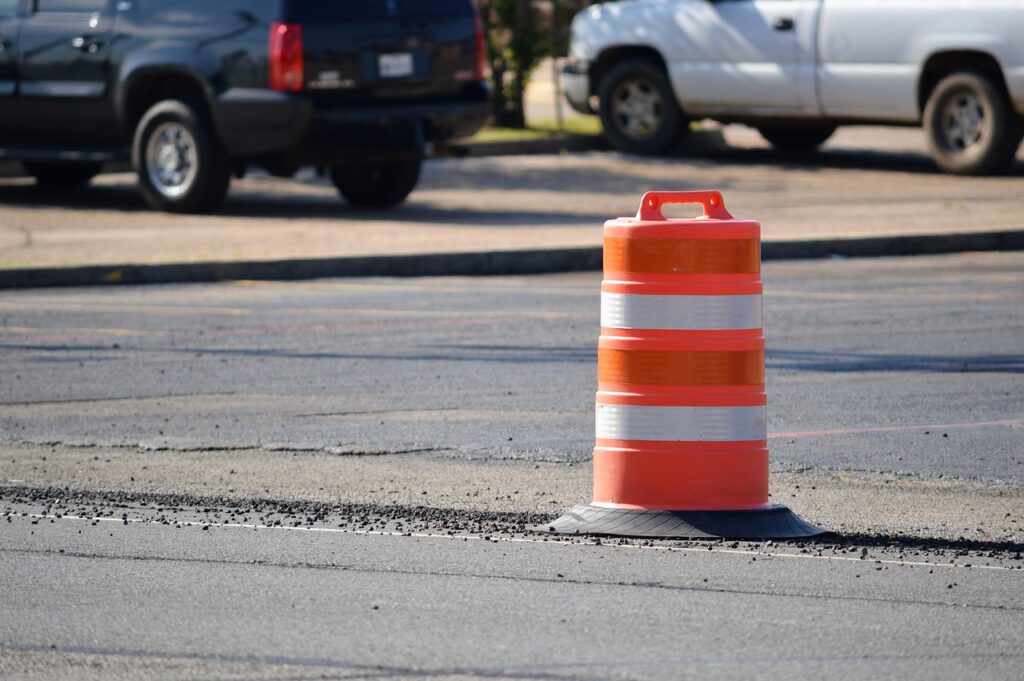
simple. Approach a rubber cone at 50km/h and, when told, perform an emergency
stop while navigating around the cone.
I did exactly that.
Apparently, I was
terrible.
No male enjoys being
told he isn’t an expert driver. The course was for my daughter, but the
instructor immediately diagnosed my problem. He said it was obvious I had
learned to drive in a non-ABS car. I was braking, releasing the brakes to
steer, then braking again.
After a few attempts
I learned something remarkable. I could slam the brake pedal as hard as
possible and, while ABS did its thing, steer around the cone.
Wow. The technology
had changed, but my driving hadn’t.
Which brings us to
today’s cars.
Modern vehicles are
increasingly loaded with Advanced Driver Assistance Systems, or ADAS. They can
automatically brake when a collision is imminent, warn us when we drift from
our lane, help keep us within lane markings and detect vulnerable road users.
Yet there is a
curious problem. Many drivers find these systems annoying and switch them off.
An Australian study
examined almost 100,000 collisions, conducted on-road testing with 50 drivers
and surveyed more than 2,000 motorists driving ADAS-equipped vehicles.
The results suggest
these systems could prevent more than 7,000 road casualties each year if fully
embraced, yet 60 per cent of drivers surveyed admitted switching off at least
some of the technology.
Perhaps the problem
isn’t the technology. Perhaps it’s us.
The research found
that just one instructor-guided drive using the systems significantly increased
drivers’ trust, confidence and intention to use them.
That sounds
suspiciously like my day on the skid pan.
We spend enormous
effort teaching young people how to drive, but comparatively little teaching
experienced drivers how to drive a modern car. Only 19 per cent of motorists
who had recently completed driving lessons or licence testing reported
receiving education about driver-assistance technology.
Meanwhile, the
technology keeps advancing. Since 1 August this year, all new passenger
vehicles sold in Australia have been required to have autonomous emergency
braking capable of detecting pedestrians. Lane Keep Assist is set to become
compulsory in new passenger vehicles from March 2029.
Maybe the future of
road safety doesn’t just require smarter cars. It requires smarter training.
After decades behind
the wheel, being told you need another driving lesson might bruise the ego.
Then again, a badly
bruised ego still heals much faster than a few broken bones.
Mathew
Dickerson